
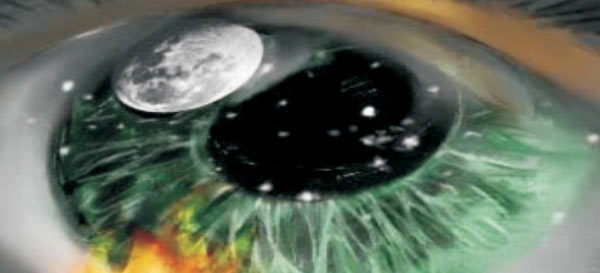
We live in a culture of seemingly constant, unremitting distractions not withstanding smart phones and other rapidly evolving technology. This is so much so that being distracted is the new normal. As a result, we accommodate non-stop distractions by embracing short attention spans. We experience discomfort if any task takes more than a brief encounter. Along the way have we lost the habit of being attentive? Do we have what Asbury University professor, Daniel Strait, identifies as a diminished capacity to see beyond ourselves.
Dan Strait writes in the November 2016 issue of Word & Deed, “We are called to ‘behold,’ ‘look,’ ‘witness,’ and ‘see’ God’s presence in our midst. Isaiah 43:19 calls us to live in the expectation of God now, at this moment, in the place where I stand: ‘I am about to do a new thing; now it springs forth, do you not perceive it? I will make a way in the wilderness and rivers in the desert’ (NRSV). Often we don’t perceive it, and, just as often, perhaps, we don’t expect anything new, not even at the start of a new year.”
He calls for a recovery of attentiveness and for a recognition of the difference between attentiveness and “attending to.” In our attentiveness, there is always more to see, learn, and know and yet always mystery, discovery, and light. A good place to begin the New Year is with attentiveness with expectancy to the presence and provisions of God in our daily lives. The Psalmist declares (Psalm 40:5), “Many, O Lord my God, are the wonders you have done. The things you planned for us no one can recount to you; were I to speak and tell of them, they would be too many to count.” The Apostle Paul (Ephesians 3:18) prays we might grasp the magnitude (how wide and long and high and deep) is the love of God, and to know this love that surpasses knowledge” (knowledge of the heart).
Here’s the call at the beginning of a New Year: “Wake up! Look! See! Pay far more attention to God and others! Make it a habit! Stop slacking off! Do something about your inattentiveness! There’s more about life in Christ than you’re seeing! Cultivate an appreciation for the wonder and grace right in front of you that makes possible a profound love for God and one’s neighbor. Instead of a New Year’s resolution, consider praying a prayer for attentiveness:
Open my eyes, that I may see
glimpses of truth thou hast for me;
place in my hands the wonderful key
that shall unclasp and set me free.
Silently now I wait for thee,
ready, my God, thy will to see.
Open my eyes, illumine me, Spirit divine!
Happiest and Attentive New Year!


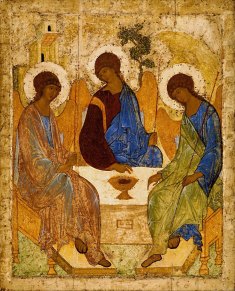

 We are social beings easily affected by the presence of other persons – by people with whom we are not competing and with whom there are no rewards or punishment, and in fact with whom they do nothing except be passively present. One hundred and eighteen years ago, a psychologist, Norman Triplett (1898), noticed that cyclists times were faster when racing together than when racing alone against the clock. He noticed the same result with children winding string faster on a fishing reel along with others than when winding alone. Triplett, a pioneer social psychologist, is credited with the beginning of research into what eventually became social facilitation theory. The theory states that the presence of others liberates latent energy and improves performance. That’s not always the case. Sometime the presence of other diminishes performance. Later studies showed that the presence of others arouses dominant responses enhancing easy behaviors and impairing difficult ones.
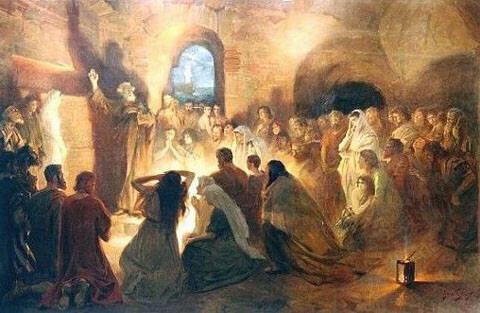 To truly know the love of God is not merely an academic, theoretical idea or engaging proposition. It is more. It is to have knowledge that surpasses knowledge, a knowledge of the heart. Such knowledge comes from being in the presence of the saints, others who walk, and talk, and love one another in holiness. This is the “what” of Paul’s prayer. Then he prays the “why” – “that you (too) may be filled (like all the saints) to the measure (Christ) of the fullness of God,” in other words that you may be holy; holy in the presence of all the saints with complete knowledge of the magnitude of God’s love in true holiness and righteousness. All the saints increasingly know the extent of God’s love. In the fellowship of saints, it is clear, knowable, visible, obvious in who they are and how they live in loving God with a profound love; loving others in ways that are immeasurably more than one might imagine (Eph. 3:20), all to the glory of God.
 Like the banks of the river, when we commit ourselves to the constraining love of Christ, such discipline occasions habits of the heart. Such habits constrain us. Jesus’ commitment to the love of the Father resulted in three disciplined habits: 1) He read the Word of God. Luke’s gospel (4:16) reads that it was his custom to go to the synagogue on the Sabbath where he would stand up and read the scriptures. 2) He frequently sought solitude to pray. “He went into the mountain to pray as was his custom.” And 3) He shared what he had and what he gained through the Scriptures and prayer. In John 17:14, Jesus says in his prayer to the Father, “I have given them your Word,” and in 17:22, “I have given them the glory that you gave me, that they may be one as we are one.” In the life of Christ, The River of Life is one of disciplined habit. In this way, the love of Christ constrains. If we love Him, we will exercise the disciplines of prayer, reading the Word of God, and sharing the Truth with others.
 Recently I’ve been reflecting about the need for clarity on what the bible means by holiness. In preparation for writing on the topic, I took another look at Dr. Timothy Tennent’s book entitled The Call To Holiness* and rediscovered the lovely hymn Make Us Holy written by his musically poetic wife, Julie Tennent. Every line is worth pondering:
 To follow God at all is to follow him in being small. God not only entered this world, but came diminished and in lowliness. This is the message of When God Becomes Small by Phil Needham (Abingdon Press, 2014). This is a book worthy of a much more developed review, one yet to come. For the purpose of this note, hear Phil Needham’s voice in two paragraphs near the end of his book:
 Are you happy with the choice we have to elect the next president on Tuesday, November 8, 2016? Do the candidates reflect what you had hoped for in the candidates?
 jonathanraymond.net