

I was out to dinner in Long Beach, California with graciously hospitable friends. They picked me up at my hotel and took me to an Asian restaurant” nearby. At the table, the waiter of Mexican heritage began the usual drill: he told us his name, asked what would we like to drink, recited the specials on the menu. He took our orders and just as he was walking away, one of my hosts said to him “In a few minutes, when the food arrives, we are going to pray before we eat. Is there anything you would like us to pray about for you?” I was surprised by the question as much as our waiter was. This was likely a first for him. It was for me. But it was quite wonderful. After he had placed the order and brought the food, he answered the question explaining the health situation of his mother and asking that we pray for her. One of the hosts said a beautiful prayer. The waiter was clearly moved. So was I. It only took a small moment, but had a big impact.
It was a very big “small moment” for me. Just then a powerful insight became so apparent. We can acknowledge the presence of God at any time and minister to others anywhere. I was struck by how naturally the moment unfolded. I attribute that to the maturity and passion of my hosts for things of the Kingdom, and for their obedience to the Great Commandment to love a neighbor.
A few days later I was sitting in a restaurant in Buenos Aires, Argentina having lunch with another lovely couple, two Argentine Salvation Army officers. The waitress came to the table and started the drill (water, menu, specials). I asked her if there was something we could pray about for her when we said our prayer over the meal. We surprised her and seized a moment of glory and grace. Try it sometime and somewhere. Take a small moment and make it bigger. Then give thanks to God.
 children’s growing faith and understanding of God. God uses these stories to move and bless our hearts and strengthen our ongoing journey with God. Here’s a good one that just happened the other day with our grandson, Jacob, who is just about to turn three years old.
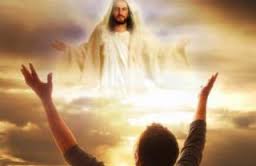 I grew up being taught that God is “omnipresent.” It meant that He was everywhere all the time.
 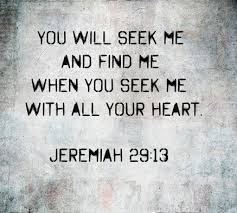 he door, I will come in and eat with him, and he with me.” Once you responded to his initial knock on your heart’s door. Now you may consciously consider Christ at the door each day, inviting you out into his day, his agenda, and his plan. As you walk each day in His presence, he engages you in fellowship.
 passing time, but not engaging in time well spent. Should I be surprised? We live in a post-Christian era of distractions and attractions that suck the life out of us in relatively valueless activity that mostly serve as a diversion from those things that really matter.
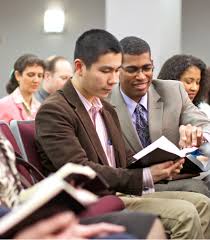 On a Seedbed.com podcast recently, Dr. Jeremy Steele used this quote from Erwin Mc Manus in discussing the purpose of the gospel. It rings true and consistent with another reflection: “We become the company we keep.” When we put these two ideas together, juxtaposing them with each other, we begin to see how God works in a believer’s life.
 We become the company we keep with other Christians, and with Christ in our daily journey. He calls us to also be a presence in the lives of others who need to know the gospel message. As it came to us, the gospel makes its way to someone else through us. The amazing thing is that God entrusts us with the message and calls us to pass it on. What a remarkable trust!
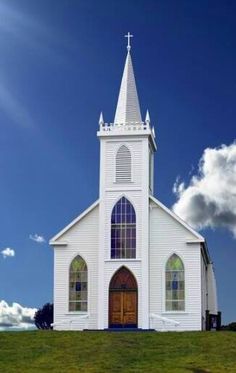 What’s happening to Christendom, at least in the Global North (including Australasia)? We now find ourselves in the “Post Christendom Era.” Recently Timothy Tennent, President of Asbury Theological Seminary, wrote “The two most important developments in the church of our time is the movement of western civilization into post-Christendom and the equally dramatic emergence of global Christianity.” Tennent goes on to say that Christendom today “produces vast numbers of nominal Christians.” He says its what Christendom does best. People call themselves Christians because that’s the culturally comfortable or normative thing to do. They do not light up the world with new Christians including their own children because they assume the culture promotes values that are inherently Christian and can just be caught naturally. Their legacy by default is godless secularism.
 I agree with Dr. Tennent. But I also agree with J. D. Watt, the lead servant of the Seedbed* initiative. He quotes the Barna Group study on “Ten Transformational Stops” to say that we’re in trouble if we keep producing nominal Christians because we don’t ask the right questions. Rather than how do we grow the church, meaning in size, we are better to ask how do we grow people (starting with ourselves), meaning in holiness after the likeness of Christ. Just growing the church in size is to produce more nominal minimalist, so-called Christians, what John Wesley called “almost Christians,” “having the form of godliness, but lacking the power thereof.” (2 Timothy 3;5), and “low road Christians” not pursuing the high road of holiness.
 What is full salvation? It’s a term we’ve heard in Wesleyan holiness contexts, but not always understood. To answer the question two other questions are helpful. What is the difference between a saved person, one who by faith received Christ’s salvation from sin, and a person who is being saved (Acts 2:47)? Another way to ask is this, “What does fulfillment of salvation look like?” The 1st person is saved from the penalty and gilt of past sin (justification by faith). They become members of a local church and get busy in the life of the faith community. The 2nd person does the same, but also goes on to being continually saved through the ongoing formation of sanctification by the Spirit. The former (1st) is like being given the whole loaf of bread, but only consuming half. The later (2nd) responds to the grace offered in the fullness of the bread of life, the whole loaf. The former risks a kind of arrested spiritual development falling short of what God fully intends for us. The later leads to a fullness of the spirit (Ephesians 3:19b) characterized by an undivided heart of perfect love in obedience to Christ’s great commandment to love both God and others profoundly (Matthew 22:36-40). The former is the experience of a Christian whose life is one of contentment wading around in the shallow tide pools of initial salvation, while the latter experiences the joys of fully plunging into the deep waters of holiness and sanctified service to the glory of God. The former wrestles with the tensions between diversified self-interest and God’s call to other-oriented, self-giving love, while the later embraces God’s call along with what sacrifices it may cost.


 What’s with tattoos? Everyone seems to have at least one. So far they are the fad of the twenty-first century. There was a time in recent history that only marines, merchant mariners, Tongan warriors, and the Yakuza had tattoos. Now tattoo parlors are everywhere. Young people are not the only ones sporting tattoos. It’s a reality across the age spectrum. Once you get one, it’s easy to get two, then three, and then the right arm, chest and leg. Their artfulness varies from strikingly beautiful to down right ugly, from the sacred and spiritually inspiring to the aberrant and wicked. What’s with all that?
 Inevitably, whether visible or hidden, they’re a conversation starter and often a source of pride (unless misspelled). Tattoos are a testimony.
 jonathanraymond.net