
 Recently I’ve been reflecting about the need for clarity on what the bible means by holiness. In preparation for writing on the topic, I took another look at Dr. Timothy Tennent’s book entitled The Call To Holiness* and rediscovered the lovely hymn Make Us Holy written by his musically poetic wife, Julie Tennent. Every line is worth pondering:
You are holy – make us holy! Let our lives reflect Your name; By Your Spirit’s pow’r within us, be a sanctifying flame. Not the work of human striving, but a change from deep within: Redirect our core affections; free us from the bonds of sin.
You are holy – so our holy lives a shining light must be, Purged from empty selfish living, filled with love that comes from thee. Purged again of seed eternal, through the living Word of God; Growing up in our salvation, tasting that the Lord is good.
You are holy, and You call us to be pure in all we do, As your character is holy, so we would be holy, too. Purified by true obedience, loving others from the heart; Serving in the world with power which you Spirit does impart. You are holy – may your church embody perfect holiness;
May the love of Christ compel us to bring forth true righteousness. Let the strains of New Creation echo through your church today; Sounding for the consummation of that glorious holy day.
– Julie Tennent
The words to this beautiful song may be sung to the tune of Beecher (“Love Divine, All love excelling) or Ode To Joy (“Joyful, Joyful, We Adore Thee”).
*Published in The Call to Holiness: Pursuing the Heart of God for the Love of the World, by Timothy Tennent, (Franklin, Tennessee: Seedbed Publishing, 2014), pp. 73-74.
 To follow God at all is to follow him in being small. God not only entered this world, but came diminished and in lowliness. This is the message of When God Becomes Small by Phil Needham (Abingdon Press, 2014). This is a book worthy of a much more developed review, one yet to come. For the purpose of this note, hear Phil Needham’s voice in two paragraphs near the end of his book:
 Are you happy with the choice we have to elect the next president on Tuesday, November 8, 2016? Do the candidates reflect what you had hoped for in the candidates?

 children’s growing faith and understanding of God. God uses these stories to move and bless our hearts and strengthen our ongoing journey with God. Here’s a good one that just happened the other day with our grandson, Jacob, who is just about to turn three years old.
 I grew up being taught that God is “omnipresent.” It meant that He was everywhere all the time.
 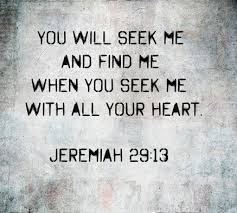 he door, I will come in and eat with him, and he with me.” Once you responded to his initial knock on your heart’s door. Now you may consciously consider Christ at the door each day, inviting you out into his day, his agenda, and his plan. As you walk each day in His presence, he engages you in fellowship.
 passing time, but not engaging in time well spent. Should I be surprised? We live in a post-Christian era of distractions and attractions that suck the life out of us in relatively valueless activity that mostly serve as a diversion from those things that really matter.
 On a Seedbed.com podcast recently, Dr. Jeremy Steele used this quote from Erwin Mc Manus in discussing the purpose of the gospel. It rings true and consistent with another reflection: “We become the company we keep.” When we put these two ideas together, juxtaposing them with each other, we begin to see how God works in a believer’s life.
 We become the company we keep with other Christians, and with Christ in our daily journey. He calls us to also be a presence in the lives of others who need to know the gospel message. As it came to us, the gospel makes its way to someone else through us. The amazing thing is that God entrusts us with the message and calls us to pass it on. What a remarkable trust!
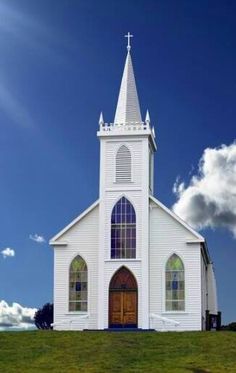 What’s happening to Christendom, at least in the Global North (including Australasia)? We now find ourselves in the “Post Christendom Era.” Recently Timothy Tennent, President of Asbury Theological Seminary, wrote “The two most important developments in the church of our time is the movement of western civilization into post-Christendom and the equally dramatic emergence of global Christianity.” Tennent goes on to say that Christendom today “produces vast numbers of nominal Christians.” He says its what Christendom does best. People call themselves Christians because that’s the culturally comfortable or normative thing to do. They do not light up the world with new Christians including their own children because they assume the culture promotes values that are inherently Christian and can just be caught naturally. Their legacy by default is godless secularism.
 I agree with Dr. Tennent. But I also agree with J. D. Watt, the lead servant of the Seedbed* initiative. He quotes the Barna Group study on “Ten Transformational Stops” to say that we’re in trouble if we keep producing nominal Christians because we don’t ask the right questions. Rather than how do we grow the church, meaning in size, we are better to ask how do we grow people (starting with ourselves), meaning in holiness after the likeness of Christ. Just growing the church in size is to produce more nominal minimalist, so-called Christians, what John Wesley called “almost Christians,” “having the form of godliness, but lacking the power thereof.” (2 Timothy 3;5), and “low road Christians” not pursuing the high road of holiness.
 jonathanraymond.net